
- info@bmctours-safaris.co.tz
- Contact our Travel Expert:
- +255 754 474 477
- Home
- Safari Package
- Mt. Trekking


- Destinations
NOTHERN CIRCUIT
- Day Trips
- Beach Holliday
- Contact our Travel Expert:
- +255 754 474 477
- info@bmctours-safaris.co.tz
- Home
- Safari Package
- Mt. Trekking
- Destinations
NOTHERN CIRCUIT
- Day Trips
- Beach Holliday
- Home
- Safari Package
- Mt. Trekking
- Destinations
NOTHERN CIRCUIT
- Day Trips
- Beach Holliday
Ultimate african's Safaris
Rongai Route
Duration
6 Days
Tour Type
Mountain Trekking
Destinations
Rongai Gate, First Cave, Kikelewa camp, Mawenzi Tarn, Kibo Camp, Uhuru Peak, Horombo Hut, Marangu Gate


Edit Content
Day by Day
About 4 hours
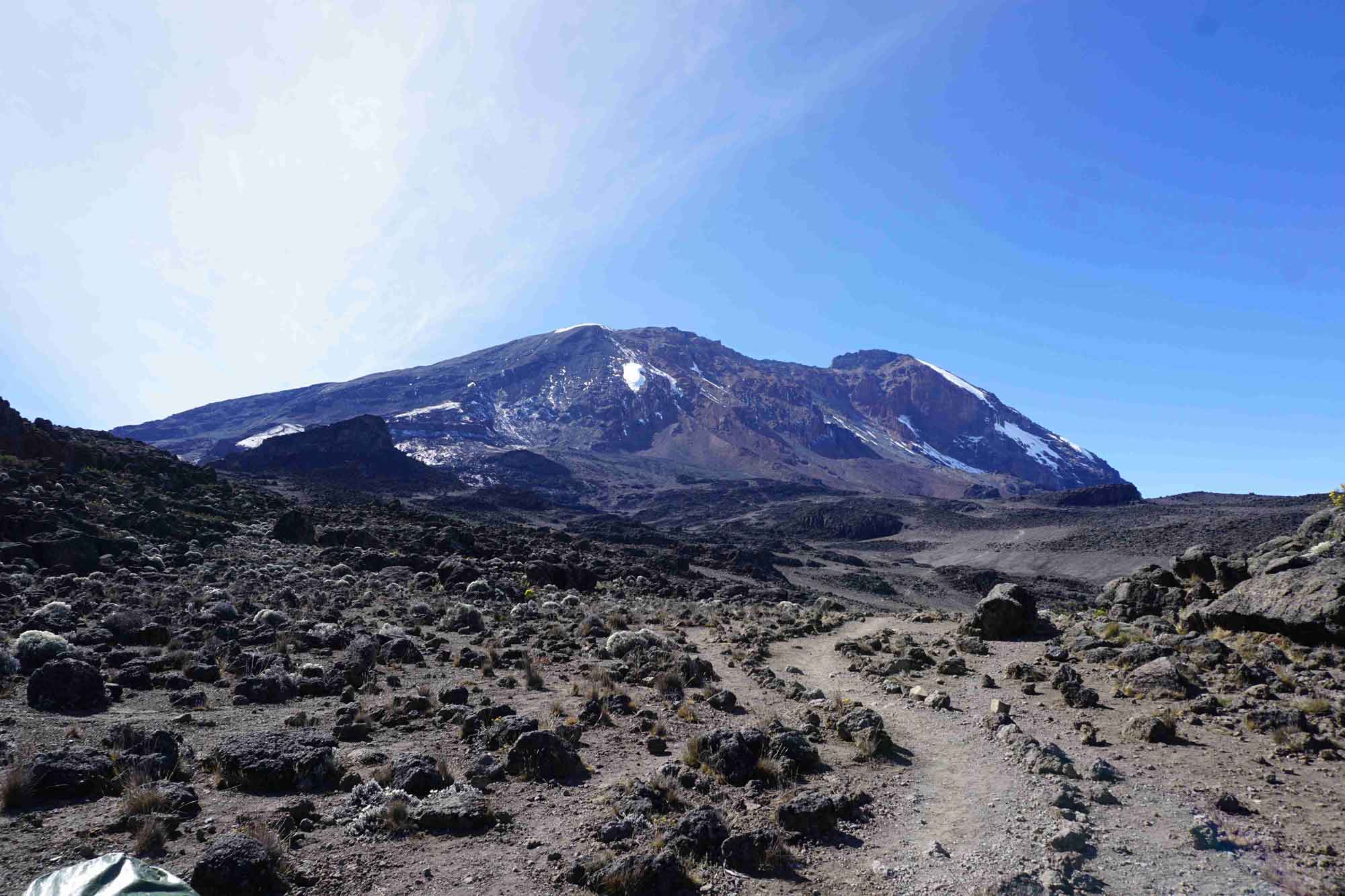
Your day starts early with breakfast, transfer to Rongai gate passing the wooden village on a path that winds through fields of maize and potatoes before reaching the entrance gate. The climb begins from the Nale Moru gate (2,150 m). After signing in and preparing the porters, the track then starts to climb consistently, but gently through attractive pine forest that shelters a variety of wildlife, including the beautiful Kilimanjaro Colobus monkey. These monkeys are black with a long ‘cape’ of white hair and a flowing white tail. The forest begins to thin out and the first camp is at the edge of the moorland zone (2,600 m.) with extensive views over the Kenyan plains. [1h30-2h30 hours walking]
About 7 hours
The morning walk is a steady ascent up to the Second Cave (3450 m) with superb views of Kibo and the Eastern ice fields on the crater rim. After lunch, leave the main trail and strike out across the moorland on a smaller path towards the jagged peaks of Mawenzi. The campsite is in a sheltered valley with giant Scenarios near Kikelewa Camp (3600 m).
About 4 hours
A short but steep climb up grassy slopes is rewarded by superb all-round views and a tangible sense of wilderness. Leave the vegetation behind shortly before reaching the next camp at Mawenzi Tarn (4330 m), spectacularly situated in a cirque directly beneath the towering spires of Mawenzi. The afternoon will be free to rest or explore the surrounding area as an aid to acclimatization.
If you are spending an extra day on the mountain, you will camp for two nights here. You can hike up and around Mawenzi for your acclimatization hike your continuing steady ascent takes you up to the Third Cave. Closer now, the eastern ice fields on the crater rim continue to draw you upwards. On this day, be careful to notice any signs of altitude sickness
Today, you hike up to the Kibo Huts at the bottom of the Kibo crater wall, and this is where you join the popular Marangu Route. Hike early in the day, then rest in preparation for your final ascent. Prepare your equipment and warm clothing for your summit climb, sleep early.
About 12 hours
Wake up at midnight to a light breakfast, and then prepare for your summit ascent. The goal is to climb before dawn so that you can reach Uhuru Peak shortly after sunrise. Leave at 1 AM, switchback up steep scree or possibly snow, and reach Gilman’s Point on the crater rim at 5,861m between 5 and 7 AM. Here, views of the fabled crater and its icecaps greet you. Another 2 hours of hiking along the crater rim near the celebrated snows takes you to Kilimanjaro’s true summit, Uhuru Peak, by 9 AM. This is Africa’s highest point, and you would have to travel more than 3,000 miles toward the Himalayas to find a higher peak! Be sure to have your picture taken at the summit to show your friends. After your summit stays, descend back to the Kibo Huts, have lunch, rest, collect your things, and cross the saddle to Horombo Huts. Eat dinner and get some well-deserved sleep!
You do the beginning of this climb in the dark with headlamps or flashlights. It will be very cold until you start descending, so you will need all of your warm layers. This is, by far, the most difficult part of the trek. Slowly slowly, or, “pole pole,” and an optimistic attitude will get you there!
Hiking Time: 5 hours
After breakfast, a steady descent takes you down through moorland to Mandara Hut (2700m), the first stopping place on the Marangu route. Continue descending through lovely lush forest on a good path to the National Park gate at Marangu (1830 m). At lower elevations, it can be wet and muddy. Gaiters and trekking poles will help. Shorts and t-shirts are recommended to wear though keep rain gear and warmer clothing handy
Transfer to Arusha for overnight
Edit Content
Included
- Park entry fees (non-residents)
- Private 4x4 safari Land Cruiser with pop up roof
- Professional English speaking safari guide
- All game drives as per itinerary
- Accommodation as stated in the program
- All meals during safari (Breakfast, Lunch & Dinner)
- Drinking water during game drives
- Airport pick up and drop off (Kilimanjaro/Arusha)
- Government taxes and VAT
Excluded
- International flights
- Tanzania visa fees
- Travel and medical insurance
- Tips for guide and crew
- Personal expenses (souvenirs, drinks, laundry)
- Optional activities (balloon safari, Maasai village visit if extra)
- Extra accommodation before or after safari
- Government park fee increases if any
Quick Enquiry
You May Also Like
Get in touch

BMC TOURS & SAFARIS
Address
P O Box 10695, Arusha, Tanzania
Phone
+255 754 47 44 77 +255 739 47 44 77
info@bmctours-safaris.co.tz gm@bmctours-safaris.co.tz
Address
P O Box 10695, Arusha, Tanzania
info@bmctours-safaris.co.tz gm@bmctours-safaris.co.tz
Phone
+255 754 47 44 77 +255 739 47 44 77
Our dedicated team of staff has strong foreign-language capabilities and the experience to be sensitive to cultural differences.
Quick Link
We Accept


© 2026 bmc tours & safaris
